Showing posts with label #HealthHacks. Show all posts

Wednesday, 17 July 2019

Types of Whey Protein and Why It's Good for Weight Loss

Have you ever looked up the dictionary definition of the word “nutrition?” No worries, we did it for you.
nu·tri·tion
n(y)o͞oˈtriSH(ə)n/
noun
1. the process of providing or obtaining the food necessary for health and growth.
What does this “process” look like for a lot of Canadians? Heading to a drive-thru? Unwrapping a candy bar? Guzzling a soda (don’t worry, it’s diet)? The ways in which we’ve chosen to nourish ourselves have gone far beyond what is “necessary for health and growth,” and veered into the territory of “what tastes the best and is convenient...and maybe has caffeine since I’m dragging.”
Maybe that’s why so many Canadians—and, well, people in general—are overweight. Unhealthy habits have been on the rise for the past few decades, so much so that nearly 30% of the world’s population is considered overweight.1
Look, we get it. Sometimes there’s just so much going on—from your career to your housework, to your family time, to your “me” time—that the extra steps it would take to really nourish your body with real, whole foods just aren’t realistic. And packaged food is everywhere: it’s convenient, it’s cheap, and it’s tasty...because it’s packed with sugar, salt, and fat.
If you’re really committed to high nutrition standards (applause!) then you might have tried other ways of making your nourishment more convenient, specifically protein bars and/or shakes. But if you read the ingredients, you’ll realize that many of these products are actually flawed themselves. They might be missing key nutrients. They might have a high sugar content. They might contain artificial colours and synthetic sweeteners. Oh, and then there’s the fact that they taste like blended chalk, and are about as satisfying.
All of that is the bad news. The good news is that there’s a better whey. No, that’s not a typo (though it is a pun). Whey is a protein source that is getting a lot of buzz in the health world, and for good reason. As a product that is high in protein but low in fat, Whey can be an important tool for helping people reach their health and fitness goals. Let’s take a closer look at some of Whey’s most impressive benefits, along with a great source of whey you’ll have to taste to believe.

What Whey can help with
We’ve all got health, happiness, and fitness goals that we’d love to achieve. That’s why we should all be best friends with whey. Here are just some things Whey can help with.

Losing weight. (We would say losing whey-t, but there are already enough whey jokes in this article, don’t you think?) So here’s the deal.
Whey protein may be especially effective for weight loss^ because it’s considered a lean protein: that is, its protein content is high while its fat content is low. So you can consume a good amount of whey protein without also consuming a lot of fat.2
All of that to say, if you’re looking to drop a few pounds, adding protein to your diet is a great way to do it, and Whey might be the best option for keeping fat intake low.

Decreasing appetite. Whey protein also does a good job of helping you feel full,3 so you eat less. This is another reason why Whey can help with weight loss^, so if overeating has been your downfall, whey just might be your answer. Additionally, whey actually helps you feel full more quickly than other types of protein do, so whey, specifically, is a good option for improving satiety.4

Supporting muscle. Ready to get really pumped about whey? Well, not only does Whey have all those great weight loss^ benefits mentioned above, but it can also help you maintain muscle.
Of course, just upping your whey intake alone isn’t enough to support muscle, but when combined with resistance training, whey protein can help muscle better than weight lifting alone.5
Why is that? Well, the amino acids in whey protein are important for muscle support. Among these is leucine, a branched-chain amino acid that stimulates protein synthesis and helps support muscle.6
And because of whey’s low-fat content, you can maintain that muscle without packing on the pounds. It’s for anyone that wants to improve their body fat percentage.

Achieving well-balanced nutrition. Protein is one of the building blocks of good nutrition. In fact, for your average 2,000 calorie diet of a sedentary person, the recommended daily amount of protein is 40-60 g. (For reference, a cup of diced chicken breast has a little over 40 g of protein, and a cup of tofu has about 20 g.) Of course, this need can vary widely based on your age, weight, lifestyle, and health and fitness goals.
Whey protein is a particularly effective source of protein because it contains all the essential amino acids the body needs, along with muscle-supporting amino acids like leucine (see above).7 So if you’re looking to up your protein intake, whey is one of your best options.

The best way to whey
Looking for any meal replacement can get really complicated, and can involve a lot of trial and error (remember the liquid chalk?). Well, at Plexus®, we’re all about taking complicated out of the equation and giving you better ways to find health and happiness. And that’s why we’re so excited about Plexus LeanTM Whey.
Lean Whey takes everything we’ve always loved about meal replacement options—the convenience and the benefits—and takes it all to the next level. Alongside our delicious Chocolate Mocha Vegetarian Lean option, Lean Whey is the answer to tasty, convenient, clean nutrition.
Plexus Lean Whey contains 15 g of rBGH-free whey protein, giving you all the great benefits of whey protein we’ve already discussed. But Lean Whey gives you a lot more-24 forms of vitamins and minerals, including methylated folate (5-MTHF). In other words, where other meal replacements leave nutritional gaps, Lean Whey fills them all in.
It also fills you up! Not only does the whey protein do its job in helping you feel satisfied, but Lean Whey also contains fiber, which helps you feel full, even though you’re consuming fewer calories. With only 2.8 g of added sugar, Lean Whey gives you satisfying nutrition while helping you lose weight.^
You might try Lean Whey for the nutritional benefit, but you’ll keep coming back to it for the taste. It’s available in two incredible flavours—Milk Chocolate and Creamy Vanilla—that seriously channel their inner dessert. No grit allowed.
Let’s review: nutrition, weight loss^, a satisfying serving, convenience, and a delicious taste. Oh, and all the great benefits of whey protein. We’re pretty sure this is the best meal replacement or healthy snack out there. Just sayin’.
Now that you know your way around whey, the only thing left is to try it for yourself. Try out Lean Whey and discover real nutrition, real benefits, real health, and real happiness. And if you’re ready to think outside the shake, we’ve got a lot of different, delicious recipes that use Lean to add a little protein boost to your day. You know what they say: there’s more than one way to whey—so check out our InThePink411 Blog Healthy Recipies page for delicious, unconventional recipes that will take the power of protein beyond the shaker.

References/Sources:
  1. http://www.healthdata.org/news-release/nearly-one-third-world%E2%80%99s-population-obese-or-overweight-new-data-show
  2. http://blog.nkdnutrition.com/what-is-lean-whey-protein/
  3. https://www.ncbi.nlm.nih.gov/pubmed/27809945
  4. https://www.healthline.com/nutrition/best-protein-for-weight-loss#section3
  5. https://www.webmd.com/fitness-exercise/news/20110315/whey-protein-may-help-build-muscles
  6. https://www.healthline.com/nutrition/whey-protein-101#muscle-mass-and-strength
  7. https://www.healthline.com/nutrition/whey-protein-101#protein-and-bcaa

Disclaimers:
^As part of an energy-reduced diet

Thursday, 11 July 2019

6 Ways to Lose Weight With a Slow Metabolism


If you’ve ever tried to lose weight (guilty), ever attended a biology class (#nerdsrule), or ever Googled “how long do I have to jog to burn off seven donuts?” (don’t ask), then you’ve probably heard the word “metabolism” before.
But how much do you really know about your metabolism? Do you know what it actually is, where it is, and how it works? And even more important: do you know how to make it work for you? While you may not be able to get your metabolism to a point where it can make your donut binge disappear overnight, there are actually a few things you can do to rev up your metabolism, which could help with problems weight maintenance.
But, we’re getting ahead of ourselves. First, let’s take a step back and nail down some of the basics of the metabolism. Don’t worry, it won’t take as long as biology class.

Metabolism crash course: what, where, when, and why.
Before we can start to manipulate the metabolism, we need to understand it. Here’s the lowdown:
What: Your metabolism isn’t actually a “thing” inside your body; rather, it’s a process that happens inside your body. Basically, it’s the process by which your body converts food and drink into energy that your body can use.1
Extra credit: Ever heard of your glucose metabolism? This refers to the way your body converts certain sugars (specifically glucose) into energy.
Where: Metabolism is happening inside every cell in your body. Some parts of your body require more energy to run than others, but everything requires some amount of energy.2
When: Metabolism sustains life. That means that it’s running all the time, even when you’re resting. In fact, the rate at which your metabolism runs while you’re resting—aka your “basal metabolic rate—” accounts for anywhere from 60-80 percent of your daily energy burn.3
Why: Because we’re guessing you want your heart to keep pumping. Every organ in your body needs your metabolism in order to function properly. Your metabolism is responsible for everything from breathing to regulating hormones.It’s why your body doesn’t shut down while you sleep, or even while you’re watching reality TV.

Not all metabolisms are created equal.
Although all bodies need a working metabolism to stay alive, not everyone’s metabolism works in the same way or at the same rate. Your basal metabolic rate—the energy your body expends even while resting—is dependent on several factors, including:
  • Age: Your driving speed isn’t the only thing that slows down as you get older. Your metabolism does, too. One theory suggests that because muscle mass decreases as we age, and muscles require more energy to function, the metabolism doesn’t have to work as hard to keep everything running smoothly.5
  • Gender: Sorry ladies, but the average woman’s basal metabolic rate is likely to be noticeably lower than the average man’s.6
  • Body size: Generally speaking, a larger body will have a slower metabolic rate than a smaller body. The underlying reason behind this is still unknown.7
While you may not have control over any of the above factors, there are some things you do have control over that might affect your metabolism. Like most things in the health world, they can basically be boiled down to two things: diet and exercise.
  • Diet: Quantity and quality are important when it comes to diet and your metabolism. If you consume too many calories, your resting metabolism won’t be able to burn them off, and if you don’t work them off in another way (see: exercise) they could be stored as fat. But eating right is just as important as eating the right amounts. Some types of foods, like proteins and whole grains, require more work to convert to energy, so your metabolism has to work harder, effectively burning more calories. Junk foods, on the other hand, are digested more easily, so your metabolism doesn’t have to work as hard to process them. Ultimately, this leads to a lower amount of burned calories.8
  • Exercise: Muscle cells are one of the most demanding sources of energy in your body. In other words, working your muscles will require your metabolism to work a little harder to keep up. Exercise is considered one of the best ways to give your metabolism an extra kick.9
A long-term focus on diet and exercise is going to be your best bet when it comes to keeping your metabolism active. That said, it never hurts to have a few tricks up your sleeve for giving your metabolism a little extra boost.

6 additional ways to boost your metabolism
  1. Green tea. It’s not easy being green, but it sure is healthy. When it comes to healthy drinks, green tea maintains a place of honor. It contains polyphenols and antioxidants, both of which have their own impressive set of health benefits. But when it comes to the metabolism, green tea’s caffeine and catechins really shine.10Caffeine, everyone’s favorite wake up call, is known for energizing the metabolism as well,11 and because of the L-theanine in green tea, green tea’s caffeine content doesn’t leave you feeling jittery like other caffeinated drinks do.12Catechins are a type of antioxidant that occur naturally in green tea (more so than in any other drink), and they’re the real metabolism-boosting powerhouse of this tea. They increase the body’s ability to burn fat and expend energy, both important functions of the metabolism. In this way, catechins are often linked not only to metabolic health, but also to weight loss.13(By the way, if green isn’t your color, we happen to know of a certain pink drink that contains ingredients that also support weight loss and a healthy glucose metabolism. Just sayin’.)*
  2. Stay hydrated. Keeping yourself hydrated is a good idea for many (many) reasons, like maintaining digestive health, heart health, joint health, overall energy, and skin health and appearance. As if you needed another reason to down more H2O, staying hydrated is also associated with increased lipolysis (a fancy word for “fat breakdown”) and weight loss.14The flip side of this is also true: if you’re dehydrated, your metabolism is probably slowing down. One study found that if you lost a certain percentage of your body’s water weight (most likely due to sweat), your metabolic rate would also decline.15We know, we know. You’ve had the “drink more water” message drilled into you before. But if you’re still struggling to drink enough, here are some quick tips:
  • Keep a bottle of water with you at all times.
  • Set timers throughout the day to remind you to drink up.
  • If you take medication or vitamins, drink a full glass of water with them.
  • Drink eight ounces before and after every meal.
  • Pair drinking a glass of water with another common activity, like opening the refrigerator or using the bathroom.
  1. Yerba Mate. Yerba Mate is actually a plant, but the tea made from that plant is often also referred to as Yerba Mate. It’s a common drink in certain parts of South America, but its popularity is expanding as more and more people discover its health benefits.Yerba Mate naturally contains caffeine, which, as we’ve already discussed, can boost your metabolism. And, similar to green tea, Yerba Mate doesn’t cause the energy spikes and crashes that coffee often does. Plus, it contains several different essential nutrients, including vitamins A, C, and E, calcium, iron, potassium, zinc, and more.
    Because of its effect on the metabolism, Yerba Mate may possibly be linked to weight management.16 Some people are wary of consuming excessive amounts of Yerba Mate, because of the caffeine content and because it’s largely unresearched. But if you’re looking for a healthy alternative to coffee, this might be just the ticket, mate.
  1. Capsaicin. If you’re ready to turn up the heat on your metabolism, you’re going to want to make sure capsaicin is part of your plan. Capsaicin (pronounced cap-say-sin, you’re welcome) is the compound in peppers that give them their heat. Long thought to have pain-relieving properties, capsaicin has an immediate burning effect on anything it comes in contact with17 (which, by the way, is why you should wear food-safe gloves when cooking with spicy peppers. Just trust us.).Capsaicin also has an interesting effect on your metabolism. Known as a “thermogenic” chemical, it may temporarily raise your metabolic rate. One reason for this is the heat itself. Eating spicy food can cause your body temperature to rise, which then automatically puts your body to work cooling itself down. This requires energy—thus, a boost in metabolism.18
    In addition to its impact on the metabolism, capsaicin may help you lose weight by suppressing your appetite and/or creating feelings of fullness.19 In other words, if you can handle the heat, it might keep you out of the kitchen.
  1. Accelerator+. If you’re finding it hard to get your daily dose of healthy teas, water, and spicy peppers, you can consider adding a supplement to your routine. Plexus Accelerator+TM contains Yerba Mate and caffeine from green tea, so you’re getting a two-for-one deal on your metabolic boost. Adding this to your healthy diet and regular exercise will help increase your body’s metabolic rate and help your body burn fat more efficiently. It’s fast, it’s simple, and it just might make all the difference in managing your weight.*Want one more way to rev up your metabolism? Say “pretty please!”
    Okay, since you asked so nicely…
    (BONUS!) 6. MetaBurnTMThis one is too good to keep to ourselves. This is a revolutionary fat-burning product that zeroes in on your body’s most stubborn fat—you know, the kind that hangs around on your belly, hips, and thighs. Its unique blend of exotic botanicals and extracts work to help keep your metabolism in high gear, helping you lose fat, weight, and/or inches. Plus, MetaBurn includes ingredients that are specifically there to help support mood and even give you a little energy boost, so losing weight^ doesn’t have to make you feel cranky and sluggish anymore. It’s a convenient, healthy way to keep your metabolism doing its job, so you can get the weight loss^ results you’ve been waiting for.*

Revving up your metabolism will only be one piece of your weight management puzzle, but taking these steps to give your metabolism a boost might be a great start. Try these little changes, keep living healthy, and get ready to feel the burn.

References/Sources:
  1. https://www.mayoclinic.org/healthy-lifestyle/weight-loss/in-depth/metabolism/art-20046508
  2. https://www.vox.com/2016/5/18/11685254/metabolism-definition-booster-weight-loss
  3. https://www.vox.com/2016/5/18/11685254/metabolism-definition-booster-weight-loss
  4. https://www.mayoclinic.org/healthy-lifestyle/weight-loss/in-depth/metabolism/art-20046508
  5. https://www.ncbi.nlm.nih.gov/pubmed/8361073
  6. https://www.ncbi.nlm.nih.gov/pmc/articles/PMC329930/
  7. https://www.khanacademy.org/science/biology/principles-of-physiology/metabolism-and-thermoregulation/a/metabolic-rate
  8. https://www.healthline.com/nutrition/junk-food-and-metabolism#section2
  9. https://www.webmd.com/fitness-exercise/guide/how-to-boost-your-metabolism
  10. https://www.healthline.com/nutrition/top-10-evidence-based-health-benefits-of-green-tea#section3
  11. https://www.ncbi.nlm.nih.gov/pubmed/7369170
  12. https://www.washingtonpost.com/lifestyle/wellness/is-it-time-to-replace-your-coffee-with-matcha/2016/08/10/da5dd9b0-5f0a-11e6-8e45-477372e89d78_story.html?noredirect=on&utm_term=.917ff82c98d7
  13. https://www.livestrong.com/article/23345-green-tea-benefits-metabolism/
  14. https://www.ncbi.nlm.nih.gov/pmc/articles/PMC4901052/
  15. https://healthcare.utah.edu/publicaffairs/news/archive/2003/news_74.php
  16. https://www.ncbi.nlm.nih.gov/pmc/articles/PMC3315195/
  17. https://draxe.com/capsaicin/
  18. https://www.healthline.com/health/food-nutrition/cayenne-pepper-for-weight-loss#research
  19. https://www.ncbi.nlm.nih.gov/pubmed/10743483

Disclaimers:
*These statements have not been evaluated by the Food and Drug Administration. This product is not intended to diagnose, treat, cure, or prevent any disease.
^When combined with a reduced calorie weight loss diet plan.

Tuesday, 18 December 2018

Health Meets Happiness


We take health and happiness pretty seriously around here. We live it, breathe it, love it, and share it. And that’s why we get a little skeptical when we hear about the latest “trends” in the realm of health and happiness.
Like that reaction you had when you heard that the fanny pack was back. Yeah, that one.
Not that we have anything against trends (fanny packs are super functional, after all), but when it comes to something as important as health and happiness, we want to make sure we’re making changes and adopting habits that will have a lasting impact. We want to sift out the here today, gone tomorrow “crazes,” and focus on things with a little staying power.
So if you’re looking for a more trustworthy list of health and happiness trends to carry you through 2019, look no further. We’ve got your guide to the very best practices and products to bring you health and happiness all year long.
Wearable technologies. The old-school pedometer was a powerhouse invention, but let’s face it—it’s got nothing on the current collection of wearable technology popping up in every store, everywhere. From basic, step-tracking wristbands (the more stylish pedometer, if you will), to tricked-out smart watches that make calls, track your heart rate, and even remind you to breathe, “wearables” are more popular than ever, and they’re not going anywhere any time soon.
A word of warning about wearables: it’s easy to get caught up in the latest and greatest features, but don’t be afraid to take the more basic route, as long as it fits your needs. Do you need it to communicate with your phone? Does it have to track your heart rate? Does it need to be waterproof? All these features (and many, many more) are available, but overdoing it could get expensive. Shop based on your needs, and your wearable will serve you for quite a while.
High-Intensity Interval Training (HIIT). When it comes to finding the time for a solid, sweat-inducing, muscle-burning workout, the struggle is real. Squeezing an hour-long jog between work, family, home, community, and personal responsibilities is just not realistic for many people.
Enter the HIIT workout.
HIIT, or high-intensity interval training, is a workout designed to be fast and intense, but super effective. During a HIIT session, you push yourself as hard as you can for a certain amount of time (say, 30 seconds), and then rest for a certain amount of time (say, 60 seconds). A 1:2 ratio of work to rest is a good place to start. The idea behind this is that many health or fitness goals—like better endurance, increased metabolism, and decreased body fat—are all more easily achieved when your body is working its hardest.1
A HIIT workout will leave you sweaty and sore (the good kind of sore), but without spending hours at the gym pounding the treadmill or lifting heavy weights. HIIT workouts are generally considered to be aerobic exercises, since they get that heart rate up. However, they also often help strengthen or tone your muscles through the use of body weight exercises (think: pushups, lunges, squat jumps, etc.) that keep your heart pumping while working those muscles.
In short, you get a lot of bang for your buck when it comes to HIIT. And a lot of HIIT exercises can be done without the use of additional equipment. So, you’ve got a short, effective workout that you don’t need a gym membership for? Yeah, we’d say that has some staying power. This is one “trend” that isn’t going anywhere in 2019.
Need some HIIT-spiration? Check out these HIIT exercise routines to get you going:
Yoga. If you’ve yet to discover the power of the “namaste,” don’t worry: yoga is still going strong into 2019, and considering the fact that it’s been around for at least 5,000 years,2 we think it’s still got a few years (or, you know, centuries) to go before people get tired of it.
Today, you’d be hard pressed to find a gym that doesn’t offer some form of a yoga class. Perhaps one of the reasons for this is that there are so many different varieties of yoga. For example:
  • Hatha: most basic yoga classes are Hatha yoga classes. They offer a good introduction to simple yoga poses and will leave you feeling loosened up.
  • Bikram/hot yoga: Bikram and hot yoga are actually not the same thing. While both are done in a heated studio (oh, the sweat!), Bikram follows the same set of poses in every session, while hot yoga offers more flexibility in the sequence.
  • Restorative: As you might guess, Restorative yoga focuses largely on relaxation and recharging. You use props (blankets, bolsters, etc.) to get your body into the poses without much effort.3
Yoga can hardly be called a trend anymore, and we’re very confident that it’s one health and happiness practice you can count on sticking around for years to come.
Partner or group activities. Remember step aerobics? These group classes were all the rage in the 80s and 90s (big hair, sweatband, and neon leggings required), but they’ve come back in a big way in the past few years. Group classes like Zumba, yoga, indoor cycling, and more are continuing to gain in popularity, and we see them as a big health and happiness trend that will be here for a while.
The great thing about group activities is that there’s built-in accountability. A lot of times, you have to reserve your spot in the class, so you’ve got to show up. Plus, the other people in class (not to mention the teacher) will provide just enough social pressure to keep you motivated. Not only that, but these classes are often high energy and (dare we say it?) a lot of fun. Who knows: you might start looking forward to your weekly spin class.
The same holds true even if you just have one workout buddy. That person is counting on you to show up, and is there for encouragement when you need them. That’s why so many people find that having someone to work out with helps them develop more regular exercise habits.
So if you’re looking to up your health and happiness game in 2019, make sure you take a friend—or a whole bunch of friends—along for the ride. You’ll be glad you did!
Functional fitness. Ever pulled a muscle carrying all those bags of groceries in from the car (one trip or bust!)? Ever tried to scoot a sofa over so you can vacuum underneath it, but you tweak your back in the process?
Of course you haven’t. (Wink wink.)
But, just in case you ever do find yourself in such a situation, you might want to look into functional fitness. Functional fitness basically involves exercises that help you perform day-to-day tasks more comfortably and without injury.
Traditional exercise tends to focus on one specific part of the body: your biceps, your quads, your deltoids, etc. The problem is that most of our daily activities don’t require one singular muscle, but rather multiple muscles working together. Functional fitness takes this into account and focuses on exercises that work many muscles or joints simultaneously, more closely simulating every day activities. For example, traditional fitness might have you do a sitting row, whereas functional fitness would have you do a bent over row, which works the back along with the arms and shoulders.4
Mindfulness. We know, we know. “Mindfulness” has become a bit of a buzzword—one of those things everyone talks about but that most people don’t really take the time to understand or practice.
But bear with us, because real mindfulness can truly have a big impact on your health and happiness. And it’s something that requires practice. It’s more than just sitting in a quiet room and thinking. It’s being aware of your thoughts, your feelings, your judgments, your surroundings, and your physical body. It’s separating yourself from your thoughts and observing them more like an outsider would.
Mindfulness, as we said, takes practice, and it’s best achieved through meditation. It probably won’t come naturally to you. You might even feel silly the first couple times you do it. That’s okay. Stick with it. Find some guided meditations that work for you (there are plenty of apps available for your phone, or recordings online) and give it a solid try.
Why? Because mindfulness can help you be calmer, more present, and less stressed. It can retrain your brain to focus better. It could help you sleep, or calm your nerves.5 And while “mindfulness” has been used rather flippantly in recent past, we see this as a trend that can only grow, as more and more people discover its benefits.
Weight management as a lifestyle. Go ahead and read that again. It doesn’t say “quick and easy fad diets for weight loss,” or “juice cleanses that will make you drop 12 pounds overnight,” or even “dedicating your life to the gym and living and dying by the numbers on the scale.” Nope.
The “trend” that we think is here to stay is treating your weight management strategies as a lifestyle. You’re changing your long-term habits, rather than your short-term menu. You’re finding a sustainable fitness routine, not one that practically kills you every time you do it. This is about making smart, everyday decisions—decisions that might seem small at first, but that really add up over time to a happier, healthier life. Decisions like:
It’s decisions like these that will end up making real changes in your life. And we’re excited to see that others are catching on to this as well—the idea that “health” shouldn’t end with your diet. So ditch the yo-yo diets, and make 2019 the year you make a real lifestyle change.
If you want lasting health and happiness this year (and we’re pretty sure you do), these are the bandwagons to jump on. They’re effective, they’re sustainable, and they’ll get you through 2019 and beyond. Trust us. After all—we are the experts.

References/Sources:
  1. https://www.self.com/story/what-is-high-intensity-interval-training-benefits
  2. http://www.yogabasics.com/learn/history-of-yoga/
  3. https://www.gaiam.com/blogs/discover/a-beginners-guide-to-8-major-styles-of-yoga
  4. https://www.webmd.com/fitness-exercise/features/working-out-for-real-life-functions#1
  5. https://www.mindful.org/meditation/mindfulness-getting-started/

Friday, 16 November 2018

Help Weight Loss One Pinch, Dash, or Sprinkle at a Time

Eating healthy and nutritious foods is always a good idea, but it is not always a delicious idea. Ask anyone who’s been on a diet, and they’ll tell you that they ended up eating many of the same foods over and over (and over again). As much as we love chicken and steamed vegetables, you can only eat those so many days in a row before your mind and your stomach starts to wonder if there’s a better option out there (maybe at that burger place down the street, for example).
Before you go cheating on your chicken, think about this: adding variety to your meal plan doesn’t have to mean coming up with crazy new concoctions every night. In fact, it can be as simple as changing up the herbs and spices in some of your favourite healthy meals. Getting creative with your flavour profiles can add some much-needed variety to your diet, so you won’t have to satisfy your cravings with processed foods and drive-thrus.
We found nine delicious herbs and spices that won’t only add a little kick to bland foods, but will also help you in your weight loss efforts. Get ready to add a little spice to your life (or at least your diet).

cayenne pepper
1. Cayenne pepper.  Cayenne pepper is a classic option for adding a little (or a big) kick to a variety of dishes. Different types of cuisine, from Mexican to Thai, all utilize cayenne pepper for its heat value and delicious flavour. But cayenne pepper will burn more than just the roof of your mouth—it can help you burn calories, too!
Cayenne pepper’s weight loss benefits are mainly a result of capsaicin, an ingredient found in several types of peppers. Capsaicin is thought to help speed up your metabolism and decrease your appetite, both of which can play a role in helping you lose weight. Additionally, the spice factor in cayenne pepper causes your body temperature to rise, so your body has to work to cool itself down, resulting in calorie burn. Of course, if your body gets accustomed to all that heat because you eat too much spicy food, then the weight loss benefit will probably decrease.1
As we mentioned above, cayenne is a pretty flexible spice. People get their doses of cayenne in a variety of ways, from adding it to their favourite sauces to mixing it in their drinking water (yes, really). You can get creative by adding it to your meat marinades or rubs, or, if you have a hard time with the heat, you can even mix a small amount of powdered cayenne into a flavourful smoothie.
Here are two of our favourite recipes that you could easily add cayenne to:
Tangy Buffalo Burgers with Pickles and Slaw
Cabbage Roll Chicken Enchiladas
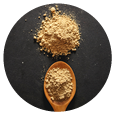
ginseng
2. Ginseng.  Ginseng is an ingredient that is popular in many Asian dishes. It has a somewhat bitter, earthy taste, but that means that it can add an interesting depth of flavour to different dishes.
Ginseng has been used medicinally for a variety of reasons, but we’ll focus on its weight loss benefits in particular. While ginseng for weight loss is still a topic of study and research, ginseng may affect the way your body absorbs and forms fat,2 meaning it could have a real impact on your weight. Some people also say that ginseng curbs their appetite,3 helping them eat less.
Ginseng is sometimes considered an acquired taste, but it is fairly easy to add it to your diet. Ginseng tea can be made from fresh ginseng (though the taste might be too bitter for some), and with many varieties of ginseng powder available, you can add a little ginseng zing to just about anything. Try adding it to your favourite Asian dishes: start small as you get accustomed to the taste!
Ginseng would also make a good addition to these recipes:
Vietnamese Tofu Veggie Rolls
Miso and Tahini Baked Eggplant
oregano
3. Oregano.  While this popular herb is actually part of the mint family, you probably won’t see it paired with chocolate any time soon. Oregano is a very common spice used in many different cuisines (notably Italian and Mediterranean). Not only is it fragrant and delicious, but it also has several health benefits, including weight loss.
Oregano contains a compound called carvacrol, which has been studied for its properties as a weight loss aid.4 One such study suggested that it may actually suppress fat formation in the body.5
While oregano might not do much for your weight loss efforts if it’s included in a carb-heavy pasta dish, it’s a great way to add some strong flavours to meats and dressings. We have a few healthy-friendly recipes that could benefit from a dash of oregano.
ginger
4. Ginger.  This one might not surprise you, as ginger has been a popular health food ingredient for years. Many people tout the benefits of ginger tea, for example, for its ability to help you shed the pounds.
But what is it about this lumpy root that makes it so great for losing weight? Similar to capsaicin, ginger can help rev up the calorie burn and calm down your appetite. And since it also contains antioxidants, it’s really just a healthy choice all around.6
Ginger has a very distinct flavour, with a little spice and a lot of fragrance. It’s one of those things that can take a dish to the next level, if it’s used right. We’ve got a few suggestions for adding this incredible ingredient to your weekly meal plan.
Roasted Vegetable Salad (add grated ginger to dressing)
Zesty Lemon Chicken Salad
cinnamon
5. Cinnamon.  It’s the darling of the dessert world, but cinnamon might be healthier than you would think.
Cinnamaldehyde, which gives cinnamon that familiar, sweetly spicy kick we all know and love, can help encourage cells to metabolize fat, rather than store it.7 What’s more, cinnamon may help create feelings of fullness,8 so you don’t eat as often (or as much). Of course, these benefits could be easily negated by all the sugar that usually accompanies cinnamon, so use it with caution.
One of the best things about cinnamon is its widespread popularity and incredible versatility. You probably have some in your kitchen cupboard right now, and it’s an easy and delicious addition to many drinks (coffee, tea, or even milk), smoothies, oatmeal, fruits, and more. It can even be used to add an interesting depth to savoury dishes (it pairs especially well with sweet potatoes). One way it shouldn’t be eaten? Alone. Eating a spoonful of cinnamon will have irritating or even downright painful effects. Stick with cinnamon-spiced recipes, and you’ll be fine. Speaking of, here are some great, healthy recipes that could be made even better with a little cinnamon.
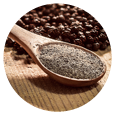
black pepper
6. Black pepper.  While table salt doesn’t make the cut for our list (hey, sodium), its partner in crime, black pepper, does.
Piperine is the part of black pepper that makes us sneeze, but as it turns out, its useful for more than just clearing out your sinuses. Piperine may change or inhibit the way your body produces fat, setting off a “chain reaction” that ultimately results in, well, less fat.9Piperine may also be added to the many metabolism boosters on this list, furthering its potential as a weight loss aid.10
Even more so than cinnamon, black pepper is a kitchen staple. Don’t be afraid to use a heavier hand with the pepper mill when you want to add a little kick to your meals. It’s a great finishing touch to almost any savoury dish! Here are a couple worth trying.
cumin
7. Cumin.  With a very distinct, slightly smoky flavour, cumin is responsible for ramping up our taste buds in many dishes, particularly in Mexican food.
Cumin’s power actually lies in its ability to magnify weight loss efforts. One study showed that participants lost about 50% more weight when adding cumin to their already healthy diet.11 This might be because of the heat factor in cumin, which may get your metabolism working a little harder. Whatever the reason, cumin just might be an easy way to add a little oomph to your meals—and to your diet.
Cumin is very common in Mexican food recipes, but it can lend its flavour to many other dishes as well. We’ve got a few favourite healthy recipes that include this delicious spice.
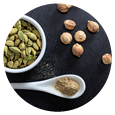
cardamom
8. Cardamom.  Possibly the “dark horse” of this list, cardamom has various medicinal uses, as well as culinary ones. It’s also used for its fragrance, which is a little woody and spicy. In cooking, however, it’s a popular choice for adding flavour to meats (especially chicken), rice, soups, and more.
As a natural diuretic, cardamom is sometimes used to reduce bloating and water retention, helping you lose weight. It also might be effective in boosting your metabolism so your body burns fat more efficiently.12
While the following healthy recipes don’t call for cardamom, the spice would be a welcome flavour to either one. You can also try using it as a simple spice for rice or roasted vegetables.
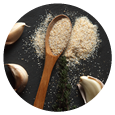
garlic
9. Garlic.  It may not do much for your love life, but garlic might help you as you’re trying to drop some pounds.
We know that when your body’s temperature rises, it has to work hard to cool itself down, thus resulting in calorie burn. Well, garlic has that effect on the body, meaning it could contribute to your weight loss efforts.
Chances are, you already use garlic pretty often in your cooking. We’ve got a couple healthier recipes that use garlic, too! Try them out.13

Eating healthfully doesn’t have to be boring or bland, and by spicing things up, you just might boost your weight loss efforts even more! Add these healthy recipes to your meal rotation, and see just how flavourful losing weight can be.

References/Sources:
  1. https://www.healthline.com/health/food-nutrition/cayenne-pepper-for-weight-loss
  2. https://www.healthline.com/nutrition/weight-loss-herbs#section5
  3. https://www.livestrong.com/article/488897-korean-ginseng-and-weight-loss/
  4. https://www.healthline.com/nutrition/9-oregano-oil-benefits-and-uses#section10
  5. https://www.ncbi.nlm.nih.gov/pubmed/21447440
  6. http://time.com/collection/guide-to-weight-loss/4787027/ginger-body-fat-obesity/
  7. https://www.rd.com/health/diet-weight-loss/cinnamon-weight-loss/
  8. https://www.forbes.com/sites/brucelee/2017/11/22/cinnamon-can-it-really-help-you-lose-weight/#6aae75c34298
  9. https://www.webmd.com/diet/news/20120504/black-pepper-may-help-fight-fat
  10. https://www.doctoroz.com/slideshow/mega-metabolism-boosters?gallery=true&page=8
  11. https://foodrevolution.org/blog/weight-loss-cumin/
  12. https://food.ndtv.com/weight-loss/cardamom-elaichi-for-weight-loss-6-reasons-to-add-the-wonder-spice-to-your-diet-1911859
  13. https://www.livestrong.com/article/538326-the-benefits-of-garlic-ginger-in-losing-weight/